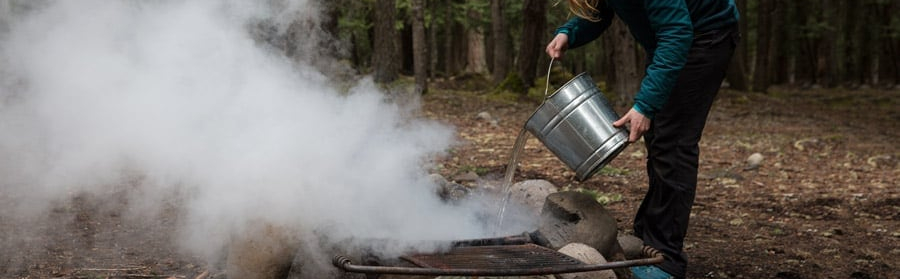
1 Thessalonians 5:19 “ Do not quench the Spirit….“
The scriptures are clear in this- we live the Christian life by the Holy Spirit who indwells us. He is our connection to Christ, our channel for the life of Christ in us each day, much like a branch is connected to the vine. How we commune and interact with the Spirit in us is vitally important every day.
We must bear all caution to remain consciously connected to the Spirit of Christ in us as much as possible at all times. When we are so connected, aware of His moving, speaking, and influence at almost every juncture of our day, He is able to live freely His life and purposes in us. Because of the importance of this relationship, Paul warns us to avoid quenching the Spirit of Christ in us.
In the previous post I presented several ways in which we can quench the impact of the Holy Spirit in our personal, daily living. We must also beware the quenching of the Spirit by us in ways that impact others.
For example, the quenching of the Holy Spirit can happen when we suppress His voice or impulses in others. We can do this by exercising our own authority and/or usurping the Spirit’s role to suppress or restrain the testimony or the use of God-given gifts in others. This is common in most “churches” in our institutional church systems. The average church services is largely one hour of relentless restraint of the Spirit’s work by means of the time-limited, prescribed, tightly controlled, customary or liturgical orders of service. We have a system that is in effect “viewing hours” for our God. The scriptures and the history of the original church have no analog to this Spirit-limiting approach. It is simply man-made religion. It quenches the work of the Holy Spirit in the congregation.
Quenching the Spirit is also the product of the “professional” approach to ministry and worship. The “professionals ministers” (I used to be one) promote this quenching of the Spirit in the congregation week after week. They monopolize the presentation of the Word and inhibit if not prohibit the exercise of the gifts of the body in their tightly controlled events. The body no longer has many functioning parts and is reduced to one or two mouths and a room full of ears.
Here the words of A.B. Simpson from over 100 years ago on the quenching of the Spirit in our “public worship: “It may be so stiff and formal that there is no room for His spontaneous working, or so full of worldly and unscriptural element as to repel and offend Him from taking any part in a pompous ritual. An operatic choir and a ritualistic service will effectually quench all the fire of God’s altar, and send the gentle dove to seek a simpler rest.“
Another feature of current Christianity that quenches the Holy Spirit is the person in the pulpit. If the preacher is asserting him or herself as the authority on truth and God’s designated spokesperson, it will inhibit the impact of the free working of the Holy Spirit in the hearers. This is in part why there is no hierarchical church structure in the scriptures, for the Lord knows humans will always tend toward the misuse of authority, and those who follow their fleshly ambitions will mislead and “misfeed” the flock of God.
There is no pastor mentioned in the instructions for the working of the body when it gathers together, as in 1 Corinthians 14:26-33: “What is the outcome then, brothers and sisters? When you assemble, each one has a psalm, has a teaching, has a revelation, has a tongue, has an interpretation. All things are to be done for edification. If anyone speaks in a tongue, it must be by two or at the most three, and each one in turn, and one is to interpret; but if there is no interpreter, he is to keep silent in church; and have him speak to himself and to God. Have two or three prophets speak, and have the others pass judgment. But if a revelation is made to another who is seated, then the first one is to keep silent. For you can all prophesy one by one, so that all may learn and all may be exhorted; and the spirits of prophets are subject to prophets; for God is not a God of confusion, but of peace.“
Here is the description of a gathering of believers under the control of the Holy Spirit, in which everyone through whom the Spirit intends to minister is free to be used for that purpose. No one is hindered by the artificiality of an order of service, tight controls on who speaks, scripted liturgies and worship, and a single source for leading and teaching. The Spirit is free to move in and speak through those whom He will for the equal edification of all.
The scripted, calendared, controlled, time-limited, hierarchical methods of all institutional church modalities quench the Spirit as if by design. The scriptural model found in the book of Acts and described in the passage above free the Spirit to live and move among the participants as the source of life and truth, as well as the teacher and guide into truth for all participants equally.
I have been a part of such fellowships over the years, and am in them now. I can tell you from experience that when compared to institutional religiosity, the Spirit is unleashed in a body of true disciples has an enormous and positive impact . The sense of the presence and moving of the Holy Spirit is palpable, and enlivening edification is a matter of course in every meeting.
 One Pursuit